Skroutz Groceries:
Driving a 15% AOV increase
Redefining the online grocery shopping experience by integrating inspiration, planning, and purchasing into a single, seamless flow.
Company
Skroutz.gr
Founded
2005
Industry
E-commerce
Revenue
€132 million (2024)
Company size
400+
What is Skroutz?
Skroutz.gr is Greece’s leading price comparison and online shopping platform, as well as the country’s 4th most visited site. It helps users discover, compare, and purchase products from thousands of online stores while offering detailed reviews, ratings, and secure purchasing options.
Skroutz Groceries is a vertical within Skroutz, aiming to make online grocery shopping as seamless and engaging as possible.
Overview & impact
+15% increase in Average Order Value (AOV)
Increased engagement with recipes and grocery content
Improved cart-building efficiency and confidence
Reduced friction and confusion during store selection
The challenge
1.5 years after launch, Skroutz Groceries was facing several challenges:
Lower-than-expected user engagement and retention
A grocery experience that felt transactional rather than helpful or inspiring
High friction during store selection
Limited differentiation from other online grocery platforms
The core question became:
How might we make grocery shopping feel easier, more inspiring, and more valuable without adding complexity?
My role & scope
As a Senior Product Designer, I owned the end-to-end design direction of the Groceries experience.
My responsibilities included:
Defining the problem space and product vision
Translating research and business goals into product strategy
Leading ideation and design execution
Collaborating closely with product manager, engineers, UX researchers, and leadership
Ensuring high-quality delivery across multiple initiatives
Research & insights
Existing Signals & Market Awareness
Before I joined the initiative, an awareness survey had been run among Skroutz users:
28% of overall Skroutz users were unaware of Skroutz Groceries
The same survey was repeated one year later:
Awareness gap dropped to 16%
While this improvement couldn’t be directly attributed to specific product changes, it confirmed:
Growing exposure to the Groceries vertical
An opportunity to capitalize on awareness by improving the actual experience
Product strategy
Making grocery shopping simple, inspiring, and personalized
Instead of incrementally improving existing UI flows, we reimagined grocery shopping around a familiar mental model:
“What can I cook?” instead of “What should I buy?”
Recipes became the central entry point into grocery shopping.
Key initiatives & design solutions
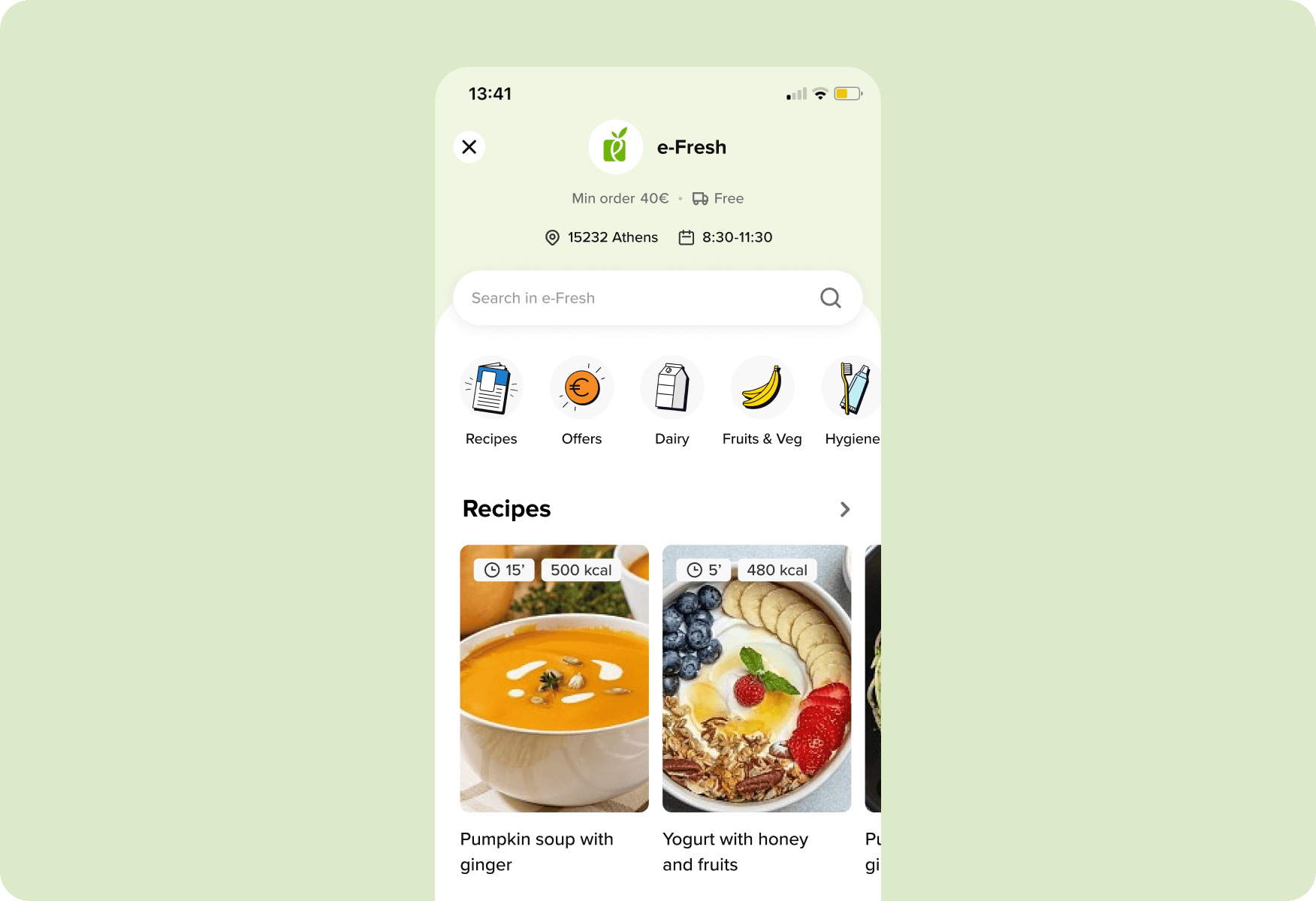
Recipe-led Grocery Shopping
We introduced a recipe experience that allowed users to:
Discover curated recipes by a professional chef
Add all ingredients to the cart with one click
Swap ingredients
To support quick decision-making, we added:
Preparation time badges
Calorie indicators


Cart-based Recipe Recommendations
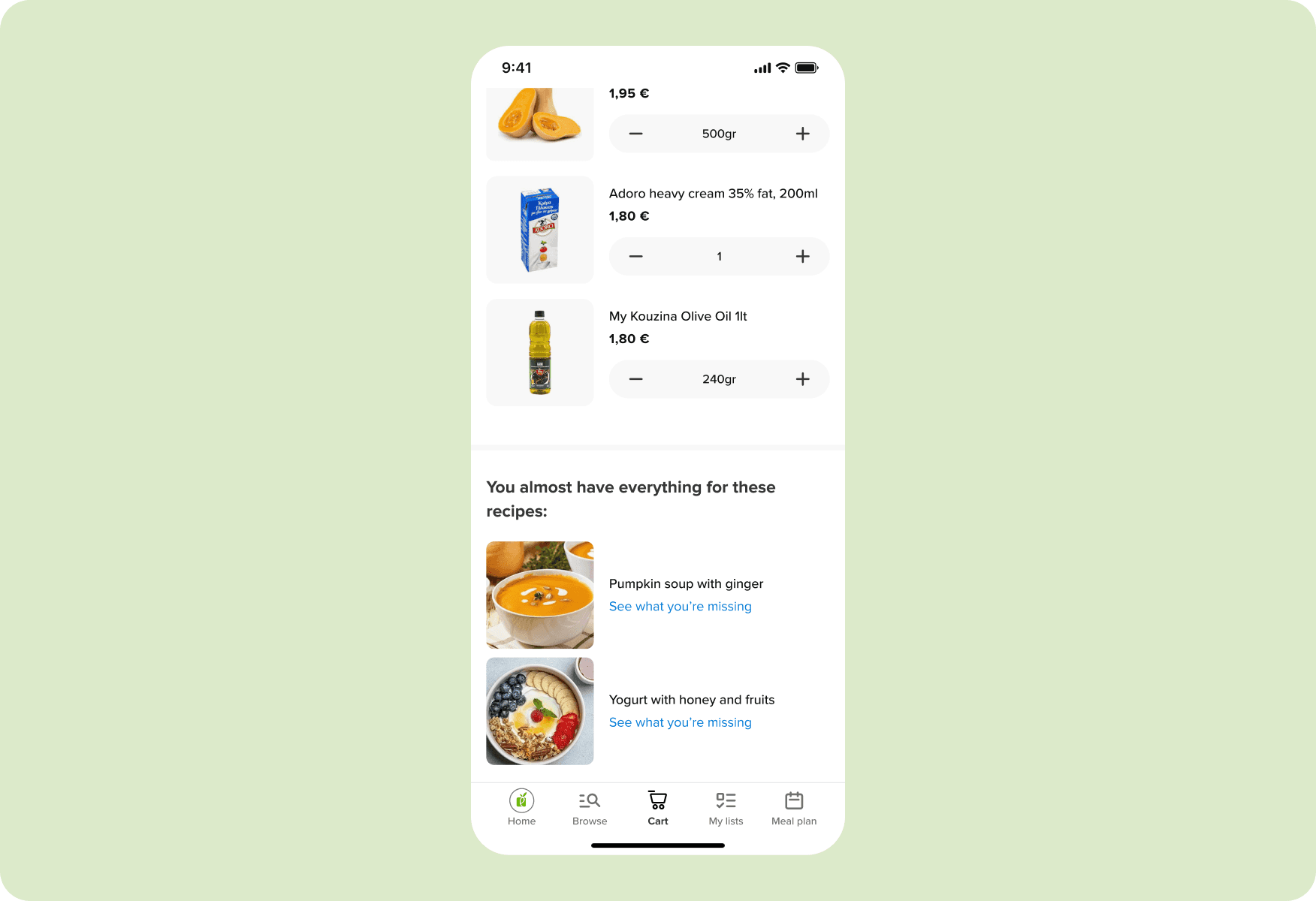
To extend inspiration beyond discovery, we integrated recipes directly into the cart.
How it works:
When users add grocery items to their cart, we check for recipes that are almost complete (missing only 2–3 ingredients)
We surface suggestions like: “With just a few more ingredients, you can cook…”
This helped:
Increase basket size organically
Reduce cognitive load
Turn shopping into a sense of progress rather than obligation
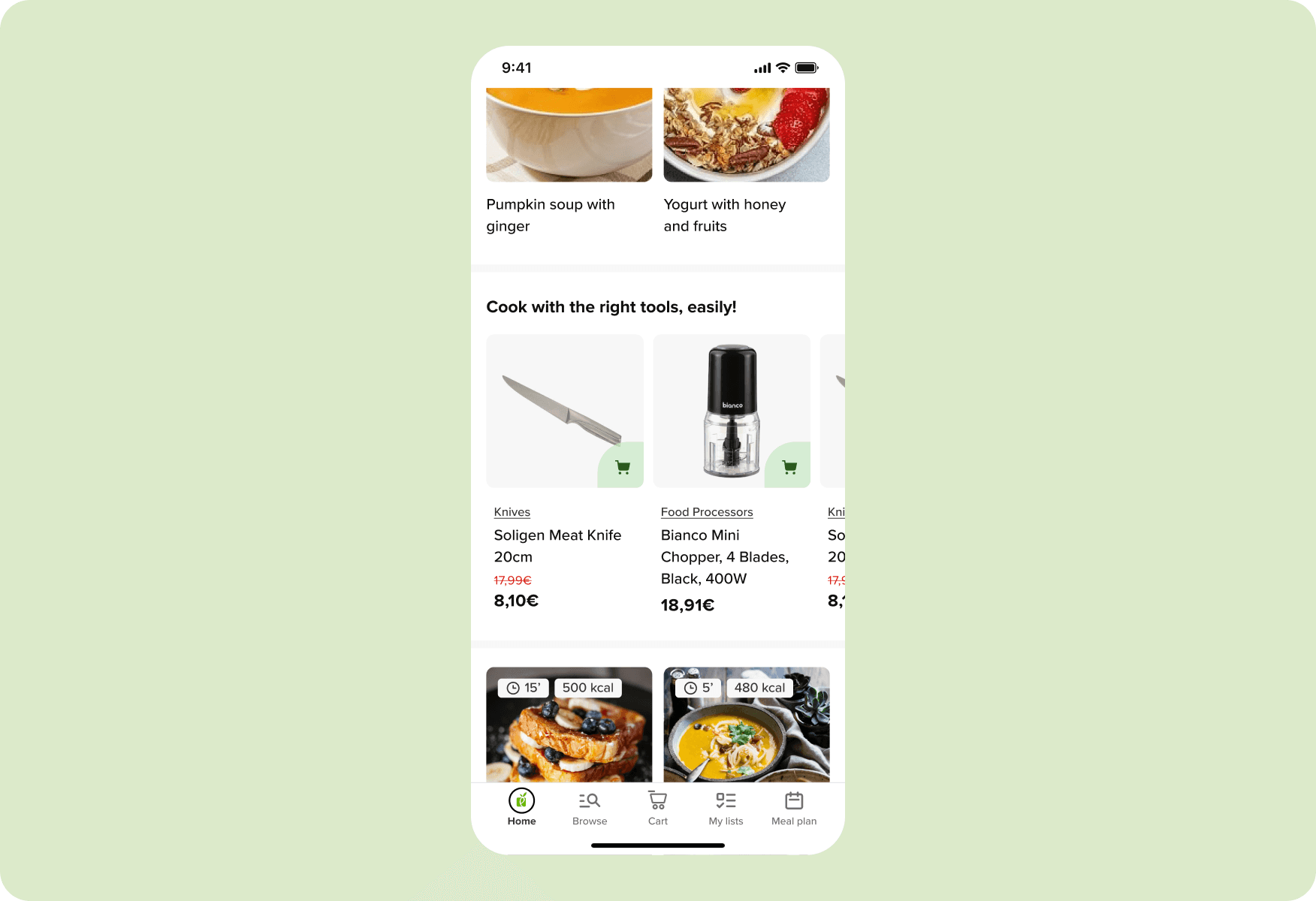
Kitchen accessories shelf (cross-category thinking)
On the recipes listing page, we introduced a kitchen accessories shelf (e.g. knives, cookware).
Hypothesis:
If a user is browsing recipes, they are already in a cooking mindset, making them more receptive to related products.
This allowed us to:
Explore cross-category value
Test intent-based merchandising without disrupting the core flow
UX improvements
Not all improvements were tied to immediate revenue impact, but they significantly improved usability and trust.
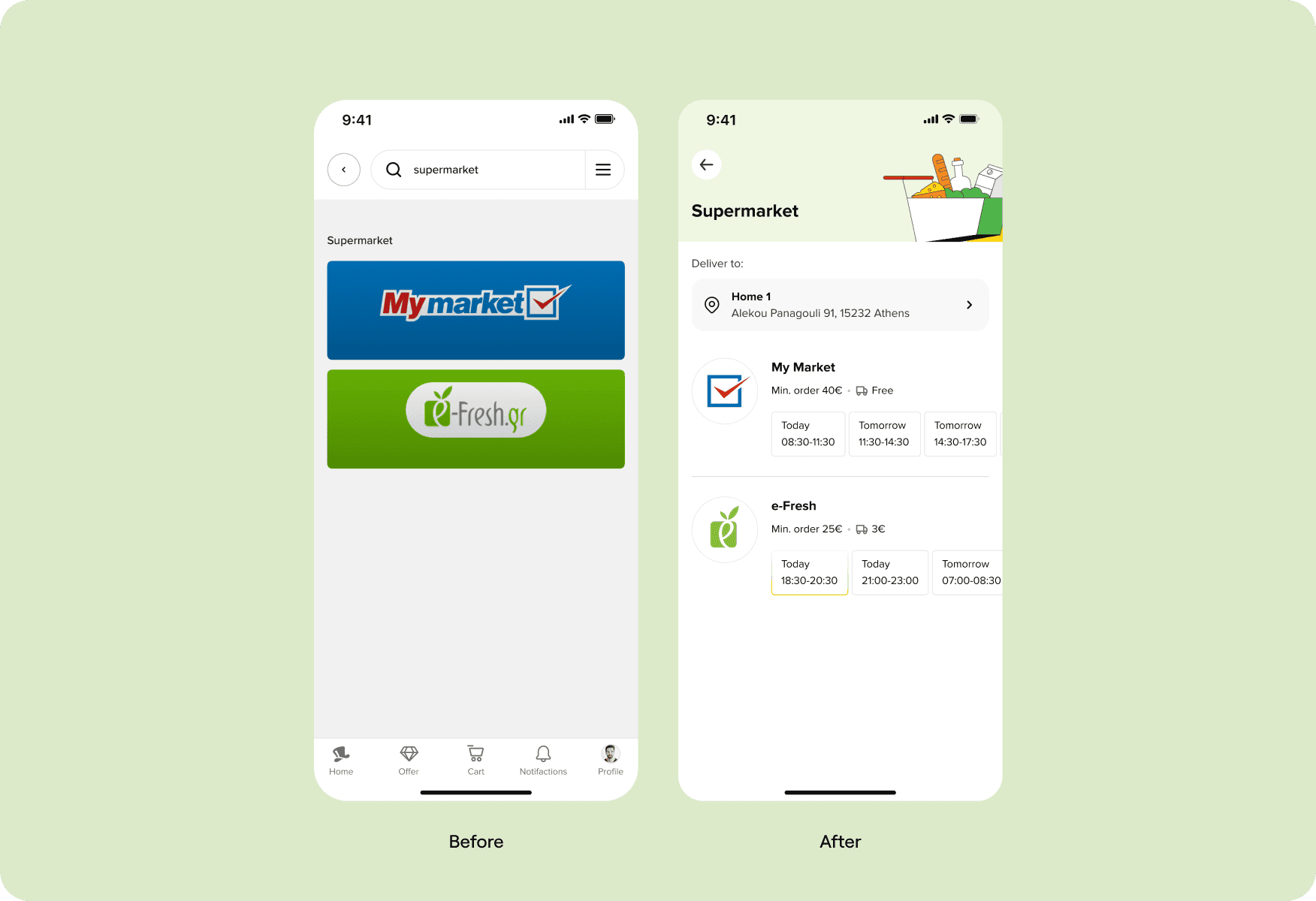
Store Selection Pain Points
Problem 1: Missing delivery address visibility
Users often built baskets for the wrong store
The issue was discovered only at checkout
Resulted in frustration and wasted time
Solution:
Clear, persistent visibility of the selected delivery address during store selection and shopping
Problem 2: Lack of critical information in store cards
Store cards lacked:
Next available delivery slot
Delivery cost
Users defaulted to well-known brands, missing faster or cheaper options
Solution:
Enriched store cards with critical decision-making information
Enabled more informed, confident choices